Top 9 Signs Your Sliding Door Needs Repair Before It Breaks Completely
Learn the top 9 warning signs your sliding door needs repair before it breaks completely. Spot early issues like sticking, grinding, and alignment problems.
4/9/20265 min read
Top 9 Signs Your Sliding Door Needs Repair Before It Breaks Completely
In the demanding climate of South Florida, your sliding glass doors are more than just an entryway; they are critical structural components that protect your home from humidity, heavy rain, and hurricane-force winds. However, because these doors are used daily, mechanical wear often goes unnoticed until a total failure occurs. Ignoring the subtle warning signs of a deteriorating door doesn't just lead to a frustrating "stuck" door—it can result in permanent track damage, shattered glass, or a compromised home security system.
At Alonso Technical Services, we specialize in identifying these early failure points from Homestead to Jupiter. By recognizing these nine red flags, you can address minor issues through professional repair before they escalate into an expensive full-door replacement.
1. Auditory Warnings: Grinding, Scraping, or Squeaking
The most immediate sign of trouble is a change in the sound your door makes. A healthy sliding door should glide almost silently. If you hear a harsh grinding or scraping noise, it typically indicates that the rollers have seized or flattened, and the metal housing is now dragging directly against the aluminum track. In coastal areas like Miami Beach, salt air accelerates this internal corrosion. Ignoring these sounds is essentially allowing the door to "sand down" your tracks, leading to irreparable gouging.
2. Increased Physical Resistance and "Heavy" Movement
If opening your patio door has started to feel like a gym workout, the mechanical integrity of the rollers has likely failed. While homeowners often assume the door is simply "old," the reality is usually collapsed bearings. In South Florida, many homes utilize heavy, impact-rated glass; when the rollers can no longer support this weight, the friction increases exponentially. A door that requires two hands to move is a safety hazard that places immense strain on the handle and the frame.
3. Visible Gaps and Frame Misalignment
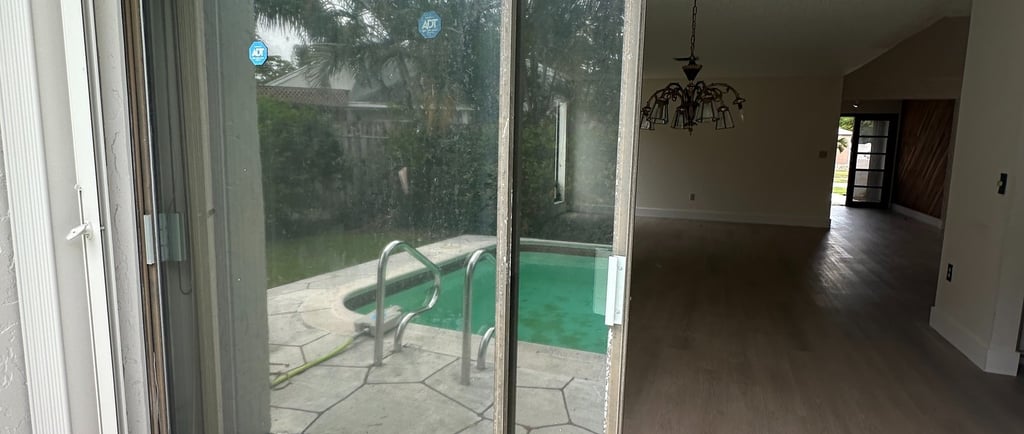
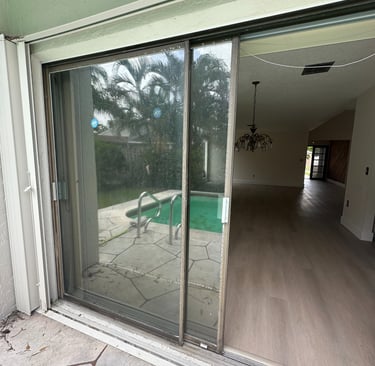
Stand back and look at your door while it is closed. Do you see uneven gaps at the top or bottom? Does the door look "crooked" in the frame? Structural settling or worn-out rollers can cause the panel to tilt. This misalignment prevents the door from seating correctly in the weatherstripping, which allows your expensive Air Conditioning to escape and invites Florida's humidity (and pests) inside.
4. The Door Constantly Jumps Off the Track
A sliding door that "derails" is a clear sign of a critical hardware failure. This usually happens because the rollers are so worn they no longer sit securely on the track's "rib," or because the track itself has become bent or "mushroomed." A door that jumps its track is incredibly dangerous, as the heavy glass panel can become unstable and fall inward or outward, causing catastrophic damage or injury.
5. Moisture Intrusion or Pooling Water in the Tracks
After a typical South Florida downpour, check your tracks. If you see standing water that doesn't drain, or if you notice dampness on your interior flooring, your drainage system is failing. Clogged weep holes or deteriorated perimeter seals are the primary causes. If left unaddressed, this moisture will lead to mold growth behind your drywall and can eventually rot the subflooring beneath the door.
6. Difficulty Engaging the Locking Mechanism
When a door shifts even a fraction of an inch due to roller failure, the locking latch and the keeper will no longer align. If you find yourself having to lift, pull, or jiggle the door to get it to lock, your home security is at risk. Forcing a misaligned lock can snap the internal mortise lock assembly, leaving your home vulnerable until a professional can perform a full hardware replacement.
7. Foggy Glass or Condensation Between Panes
If you notice a permanent "fog" or moisture trapped inside the double-pane glass, the thermal seal has failed. In the heat of Broward and Palm Beach counties, a broken seal significantly reduces your home's energy efficiency. While this is often an aesthetic complaint, it indicates that the structural sealant of the IGU (Insulated Glass Unit) has been compromised by heat and age.
8. Hairline Cracks or Chipped Glass Edges
In a region prone to high winds, any compromise in the glass is a major red flag. Small chips or "oyster shell" cracks near the edges of the frame are often caused by the door slamming or vibrating against a damaged track. Under the pressure of a storm or even a sudden temperature shift, these minor flaws can turn into a complete spider-web shatter of the entire panel.
9. Brittle or Missing Weatherstripping
Take a close look at the "fuzzy" or rubber seals around the perimeter of the door. If they are falling out, flattened, or feel brittle to the touch, they are no longer providing an airtight seal. In South Florida, UV radiation destroys standard weatherstripping every 5-7 years. Replacing these seals is a simple repair that can significantly lower your FPL bill and prevent water leaks during hurricane season.
FAQ: Professional Repair Insights
Is it cheaper to repair or replace a sliding door? In 90% of cases, a professional restoration (new rollers, track repair, and alignment) is significantly cheaper than a full replacement, especially for high-quality impact doors.
How long does a typical repair take? Most professional repairs, including roller replacement and track resurfacing, can be completed in 1 to 2 hours by a skilled technician.
Why can't I just use WD-40 on my stuck door? WD-40 is a degreaser, not a long-term lubricant. It actually attracts South Florida sand and grit, creating a "grinding paste" that destroys your rollers faster. Only professional-grade dry silicone should be used.
Can a DIY repair save me money? Lifting a 200lb impact glass panel without professional equipment is dangerous. One mistake can shatter the glass or bend the frame, turning a simple repair into a multi-thousand dollar replacement.
What is the common problem with sliding doors?One of the most common problems with sliding doors is worn or dirty rollers that cause sticking, wobbling, or difficulty opening the door. Track damage and debris buildup also interfere with smooth movement and can make the door feel heavy or unstable.
How do you repair a sliding door?
Sliding door repair often involves cleaning the tracks, adjusting or replacing worn rollers, and ensuring the door is properly aligned. Professional technicians may also repair damaged tracks, replace hardware, or adjust the frame to restore smooth operation.
Is it better to repair or replace a sliding door?
Repair is often the best choice when the issue involves rollers, tracks, or alignment. Replacement may be necessary when the door is severely damaged, outdated, or no longer provides adequate security or energy efficiency.
Do sliding doors need maintenance?
Yes, sliding doors require routine maintenance to stay in good condition. Cleaning the tracks, lubricating the rollers, and inspecting the hardware regularly help prevent breakdowns and extend the door’s lifespan.
What is the lifespan of a sliding door?
A well-maintained sliding door can last many years, depending on the quality of the materials and how often it is used. Regular care and timely repairs help prevent early wear and support long-term performance.
[Don't wait for a total failure. Contact Alonso Technical Services today to schedule your professional door inspection and restore your "single-finger" slide!]
Quality You Can Trust
"We specialize in top-quality sliding door and window repair using durable parts and expert craftsmanship. Trusted by homeowners throughout Miami, Broward, and Palm Beach, we deliver precision work to ensure your home stays secure and functional."
Trusted & Reliable
Service
+1-305-724-3508
© 2026 Alonso Technical Services Sliding Door & Window Repair. All rights reserved.